
Engineering and advice for the systems organisations run on.
Ryoss Labs is an Australian technology services company. We advise on technology decisions, provide senior technical leadership, and design, build and improve software, integrations and infrastructure. Work often begins with a difficult software, systems or operational problem.
Where we can help
Every business and industry is unique in its setup and its operations. But software and system challenges tend to be similar across all of them. Here are some of the most common issues we can help with.
Systems that don't talk to each other
Staff export, tidy and re-enter the same records. A missed step shows up later as a wrong invoice, a status two systems disagree about, or a report nobody trusts.
Work still running manually on spreadsheets and email
A process depends on files moved by hand, on a shared inbox, or on one person's memory of the exceptions. It holds together until that person is away or overloaded.
Software that is hard to change
The application cannot be switched off. The people who built it have left, the notes no longer match the behaviour, and every change feels like a risk.
A decision with operational consequences
A vendor proposal, a platform choice or a migration needs an independent technical view: what it would cost to run, what it locks in, and what has not been considered.
Continuing senior technical direction
Leadership needs someone who can keep organisational context and own technical decisions over time, while existing staff or vendors continue the day-to-day work.
Don't see your problem here? Tell us about it.
Areas of work
These are useful starting points. Our work often involves more than one of them.
Integration
Integrations between the business systems an organisation already runs, built so information and processes move reliably, failures are visible and someone is responsible for the result.
AI
Practical AI systems for organisations where a language or document model is a useful part of a wider software, data or workflow environment, with the access controls, validation and monitoring around it.
Software Development
Custom software for organisations whose process is not adequately supported by the products available, and staged modernisation of existing systems that are still worth keeping.
Hosting & Infrastructure
Hosting and infrastructure for business applications, designed and operated around the reliability, security and recovery needs of the software that runs on it.
Technology Advisory
Independent advice on a defined technology problem or decision, delivered as a written recommendation by people who also design and implement systems, and useful whether or not Ryoss builds anything.
Describe the problem to us
Book a free 15 minute call and tell us what is going wrong and which systems are involved.
Ways to work with us
Some problems suit a defined project, others need continuing capability or senior advice, and many involve more than one.
Clearly defined projects
Bounded work with an identifiable outcome, such as an integration, a review, application work, a migration or a staged remediation. Scope is agreed after an in-depth exploration of the challenge together, so it rests on what is known. Changes are agreed before extra work starts, so you stay in control of cost.
Continuing engineering capability
Ryoss partners with your business in a software, integration or engineering capacity while the systems keep changing. We come to know your business and act as an internal capability team to solve problems, push projects along, and provide support and guidance.
Technology leadership and advice
Focused advice on a defined decision, retained advice for a team that already owns the agenda, or embedded senior leadership with continuing responsibility for technical direction. A review or recommendation can be the complete engagement.
Managed services & support
Operational responsibility for application environments, domains and DNS, system administration, websites and hosting. Without a dedicated IT team these things tend to sit low on everyone's list, and Ryoss can take responsibility for them.
How a typical engagement works
The hardest part of most technical problems is understanding the problem and its consequences properly. We work through the technical, operational and commercial implications first, so the solution fits the business as a whole.
Ongoing support
After handover, support can continue in the background as new features, fixes and changes come up.
01Discovery
We start with what happens today
Work begins by following the process as it actually runs, including exceptions and workarounds. We aim to understand all the inputs and outputs, people involved, host systems, commercial implications, and expected outputs.
02Architecture
Identify and architect the solution
We shape the right solution around the way the business actually works, not around a generic template. We identify the ideal end state and its impacts on the process itself, its stakeholders, and the business at large.
03Scope and planning
In-depth scope and change management planning
We define exactly what needs to change, how it will be delivered, and where the risks sit. That includes the technical scope, the people involved, the dependencies between teams, and the practical work needed to move from the current state to the new one.
04Build
Build in stages against the agreed scope
The solution is built in stages, with working software in front of the people who will use it early enough to change direction. Decisions that affect scope, cost or risk come back to you before we continue.
05Testing
Test against real scenarios
Before anything is considered finished, we test it against real scenarios, including the exceptions and workarounds we found during discovery.
06Training and handover
We make sure the people using the solution are ready. Training, documentation, support and handover are built into the delivery, so the solution keeps working after the project ends.
Ongoing support
After handover, support can continue in the background as new features, fixes and changes come up.
Industries
Tertiary Education
Systems integration, software and technical advisory for Australian universities, TAFEs and RTOs, focused on the joins between the student management system, the LMS, the CRM and government reporting.
Bookkeeping & Accounting
Systems integration, software and technical advisory for Australian bookkeeping and accounting practices, coordinating the ledger, practice manager, tax products, documents and ATO lodgement.
Real Estate
Systems integration, software and technical advisory for Australian real estate agencies, connecting sales, property management, trust, listings and portals so the same person is not lost between them.
Legal
Systems integration, software and technical advisory for Australian law practices, keeping the matter, the file, time, trust and the new AML/CTF intake questions connected and auditable.
The team
The people behind Ryoss Labs.

Ross Wallace
Technology Lead

Martyn Ryan
Commercial Lead

Jonah Caminia
Operations Lead
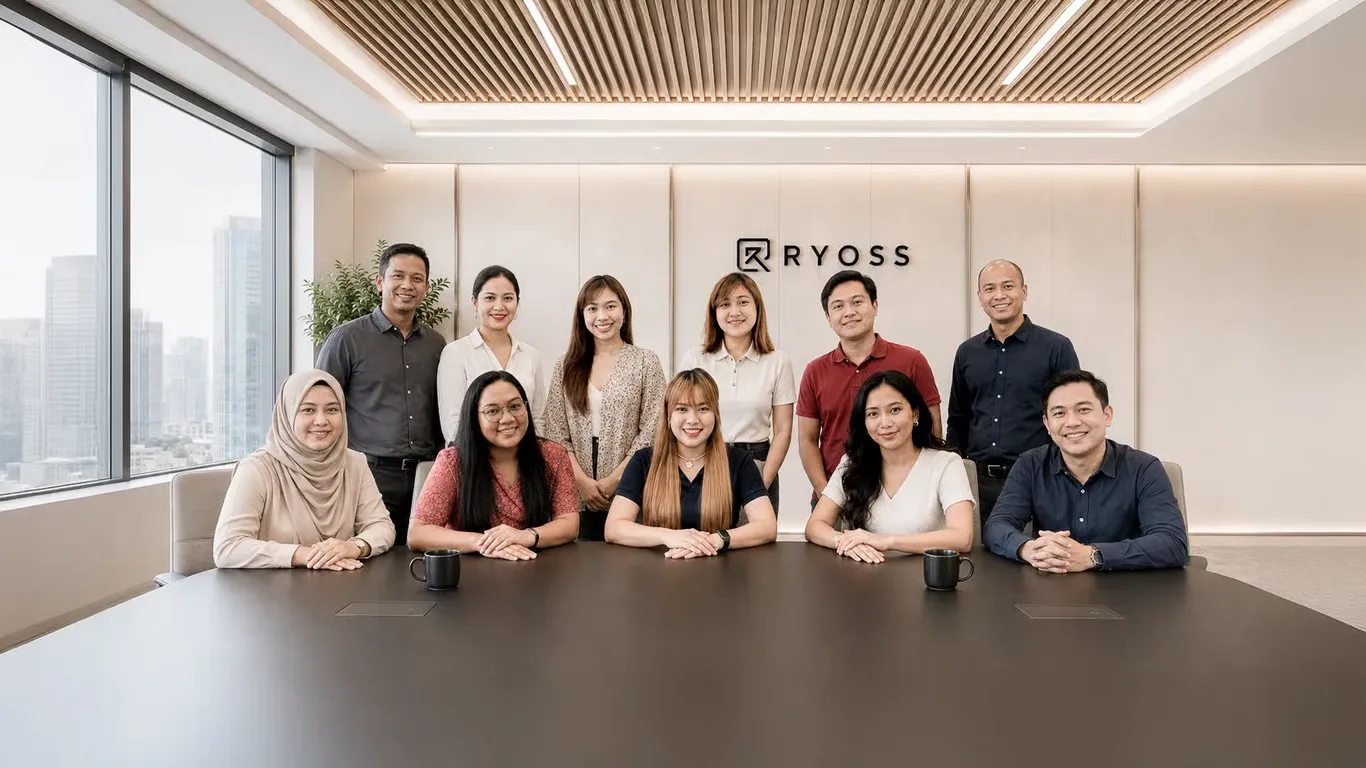
The wider team
Latest articles
Analysis of the decisions behind integration, software, AI and infrastructure work.
Where AI should assist, but not own the judgement, in higher education
AI can help with curriculum, course material, assessment, admissions and integrity work. The harder question is whether the institution can still explain, review and take responsibility for the judgement that affects a student's learning or outcome.
When an integration platform is enough, and when custom integration is worth building
Zapier and Power Automate can be the sensible way to connect systems when the workflow is clear and failure is easy to recover from. Custom integration becomes more attractive as state, reconciliation, throughput and operational consequences become harder to leave inside a platform abstraction.
Common questions
Why not hire someone internally?
An internal hire gives you one skill profile and a fixed ongoing cost, and the right person can take months to find. That is the right answer for a role the business needs every day. Ryoss is useful when you need several kinds of capability across software, integration and infrastructure without building a team first, or when you want an independent view alongside the people you already have.
We already pay for a platform. Do we still need custom work?
Often not. The first question is whether the platform is being used well. Configuration, integration, automation and reporting can get a lot more out of an existing platform than replacing it would. Custom software makes sense when the platform cannot support a process the business depends on, and we will say so when it does not.
Can't we do this ourselves with AI?
AI tools can speed up building software, and we use them ourselves. They do not replace understanding the problem, designing the architecture around it, or taking responsibility for the result. The risk comes from losing human ownership of what was built, when nobody can explain how the application works or change it safely. We can help you use AI sensibly, or review something that has already been built that way.
How do we know we will not be locked in?
We design systems to be maintained by someone else, including your own team, and we document them for that purpose. Where a different path is better for you, such as buying a product or making a hire, we will say so.
What will it cost?
It depends on what has to happen for the solution to be reliable, secure and maintainable. Discovery, architecture, testing, deployment, monitoring and handover all take time, even for work that sounds simple. A discovery call is free and is the quickest way to find out whether the work is a small change or a larger project.
Start with a conversation
Book a free 15 minute call. Describe the problem, the systems involved and what you already know, and we will tell you plainly whether we can help and what a sensible next step looks like. There is no obligation.